
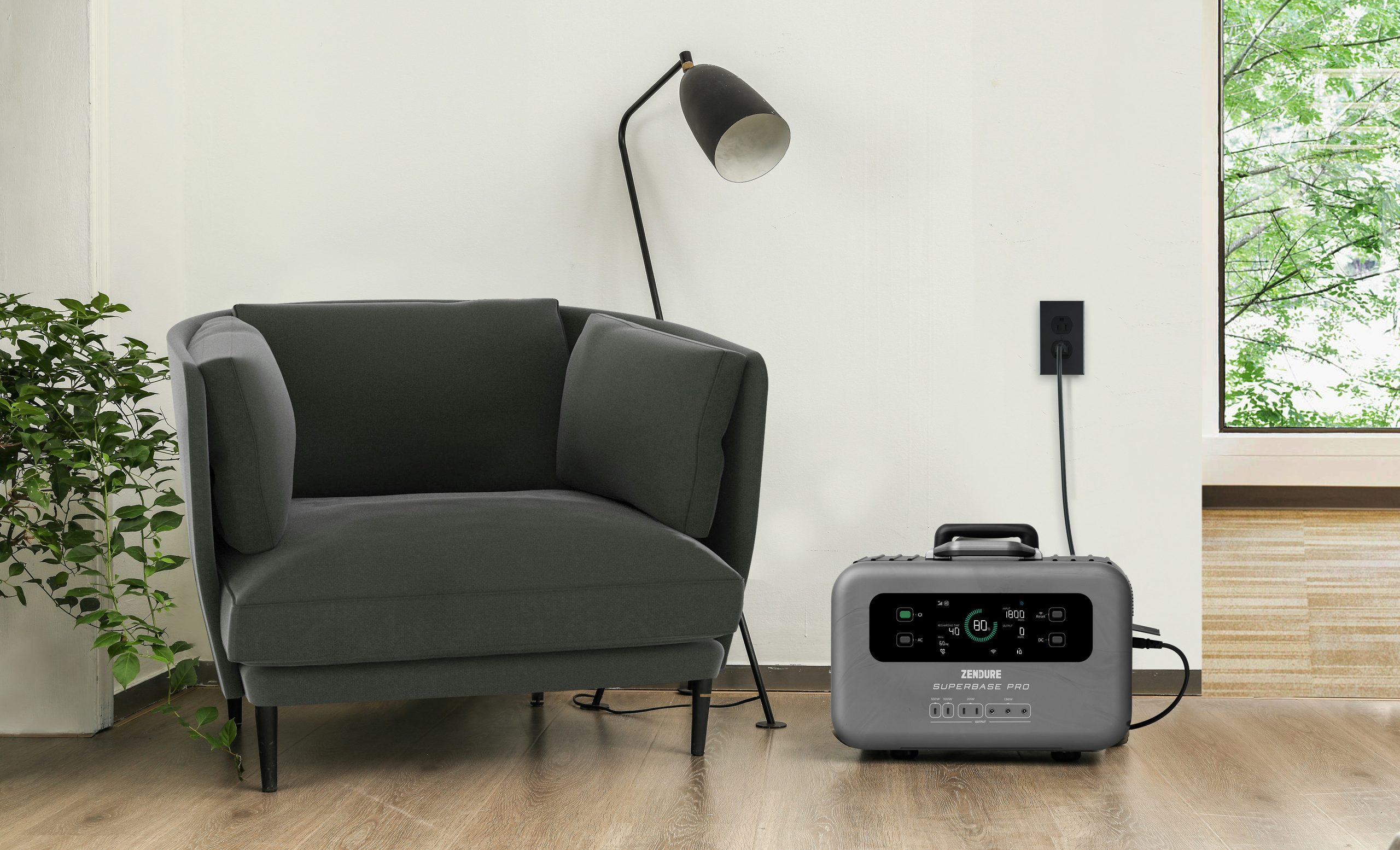
If you need grab-and-go emergency power you can toss into the back of a truck in thirty seconds with zero wiring, a quality portable power station (like an EcoFlow, Bluetti, or Jackery) makes complete sense[1]. If you are building a stationary home backup rig above 2,000 watt-hours—or any setup you expect to fix yourself ten years from now when the warranty is long gone—a modular DIY battery bank built from discrete LiFePO4 batteries, a pure sine wave inverter, and a dedicated MPPT charge controller costs 35% to 50% less per usable watt-hour and won’t turn into a 60-pound paperweight when a single cooling fan or charging port dies[2][3].
Most buyers compare these two routes on sticker price alone and miss the real trade-off: packaging convenience versus component-level repairability. In a sealed all-in-one box, the Battery Management System (BMS), AC inverter, solar charge controller, and DC-DC converters are soldered onto tightly integrated proprietary mainboards inside a molded shell[8]. When one subsystem fails out of warranty, you cannot swap it out at a marine or auto parts store—you have to ship a 60-pound hazardous lithium unit back to a factory service depot or replace the whole rig[4].
Safety & Field Disclaimer: Building a modular DIY DC power system exposes live high-amperage busbars and battery terminals that require proper overcurrent protection, insulated torque tools, and strict wire-gauge sizing to prevent arc flash and electrical fires[5][6]. Install a Class T fuse within 7 inches of the battery bank positive terminal before connecting an inverter, enclose all exposed busbars in non-conductive covers, and never attempt to open or repair sealed internal lithium-ion pouches inside commercial portable power stations[7][8].
What Is Actually Inside the Box vs. on a Plywood Backboard
Strip away the plastic handles, Bluetooth apps, and LCD screens, and every battery-powered emergency system contains the exact same five building blocks:
- 1. Lithium Iron Phosphate (LiFePO4) Cells: Both modern portable power stations and quality DIY batteries use prismatic LiFePO4 chemistry rated for 3,000 to 6,000 charge cycles down to 80% remaining capacity[3][9].
- 2. Battery Management System (BMS): An electronic protection circuit that disconnects the cells if voltage climbs too high during charging, drops too low under heavy load, or if cell temperature falls below freezing[7].
- 3. Pure Sine Wave Inverter: Converts low-voltage DC battery power (12V, 24V, or 48V) into 120V AC household electricity with less than 3% Total Harmonic Distortion (THD) so refrigerator compressors and furnace blower motors run cool[10][11].
- 4. MPPT Solar Charge Controller: Steps down higher solar panel voltage (20V to 250V DC) to charge the battery bank efficiently[12].
- 5. High-Speed AC Charger & DC Step-Down Converters: Recharges the pack from a wall outlet or portable generator and regulates 12V cigarette-lighter and USB-C outputs.
In an all-in-one portable power station, all five subsystems are packed into a single UL 2743-certified enclosure[8]. You pull it out of the cardboard box, plug your refrigerator into the front AC outlet, and you are done in two minutes. In a modular DIY battery bank, you bolt those exact same subsystems onto a fire-resistant mounting board or battery rack as independent components linked by heavy tinned-copper cables and busbars[6][2].
The Single-Point-of-Failure Problem
When a regional ice storm or hurricane knocks out power for ten days instead of ten hours, single points of failure become a serious liability.
Inside a commercial portable power station, a $12 brushless cooling fan seizure, a blown MPPT input MOSFET from a cold-morning solar spike, or a failed AC relay triggers a protective fault code on the LCD screen that locks out the entire unit[4]. You can be sitting on 2,000 watt-hours of fully charged lithium cells and have zero way to pull a single watt out of the box—and because manufacturers use proprietary BMS communication buses and potted circuit boards, local electronics repair shops cannot get schematics or replacement boards[4].
With a modular DIY component build, every job is isolated to a replaceable, off-the-shelf box:
- If your solar charge controller fails: Your battery bank and AC inverter keep running normally, and you can recharge the batteries off a vehicle alternator, a DC-DC charger, or a standard AC battery charger plugged into a small inverter generator[2].
- If your 2,000W AC inverter trips or burns out: Your 12V/24V DC blade fuse block still powers LED lighting, HAM/GMRS transceivers, cell phone chargers, CPAP DC adapters, and 12V compressor coolers directly from the battery busbars without needing an inverter at all.
- If one battery in a multi-battery bank develops a weak cell: You unbolt two terminal lugs, pull that single battery out of the parallel string, and keep running on the remaining batteries while you replace one standard 12V or 24V unit[9].
- If you want more runtime next year: You are never trapped buying a manufacturer’s $900 proprietary expansion battery (which often gets discontinued two years later when the next generation comes out). You simply bolt another standard Group 27 or Group 31 LiFePO4 battery onto your copper busbars[9].
Two Worked Cost-Per-Watt-Hour Scenarios
Sticker prices mislead buyers because portable power stations bundle everything into one number, while DIY builds split costs across individual parts—and often deliver 20% to 25% more usable watt-hours at the same budget. Before pricing either rig, calculate your real daily appliance consumption and motor startup surge loads.
Scenario 1: Compact 2 kWh Weekend & Fridge Reserve
Suppose you want enough stored energy to keep a modern kitchen refrigerator (1,200 Wh/day), a Wi-Fi router and fiber modem (360 Wh/day), and LED room lights (200 Wh/day) running for roughly 24 hours without recharging[13].
Option A: 2,048Wh All-in-One Portable Power Station
- Typical 2026 retail price for a name-brand 2,048Wh / 2,400W LiFePO4 unit (such as an EcoFlow Delta 2 Max, Bluetti AC200L, or Jackery Explorer 2000 Plus): $1,299 – $1,699[1].
- Usable energy after 90% inverter efficiency and 90% BMS usable depth of discharge: ~1,660 Wh.
- Real cost per usable watt-hour: $1,450 average ÷ 1,660 Wh = $0.87 per usable Wh.
Option B: Equivalent 2,560Wh Modular DIY Build (Two 12V 100Ah LiFePO4 Batteries)
- Two 12V 100Ah Grade-A LiFePO4 batteries with low-temp BMS cutoff (2,560 Wh nameplate): $440 – $560[3].
- 2,000W 12V Pure Sine Wave Inverter (4,000W surge, UL 458 listed): $240 – $320[10].
- 30A MPPT Solar Charge Controller (100V max PV input): $95 – $130[12].
- Class T 250A fuse + holder, 2/0 AWG tinned copper cables, 600A copper busbars, and 500A shunt battery monitor: $165 – $210[14][15].
- Total DIY build cost: $940 – $1,220 for 2,560 Wh nameplate (~2,070 Wh usable).
- Real cost per usable watt-hour: $1,080 average ÷ 2,070 Wh = $0.52 per usable Wh—saving $370 upfront while giving you 25% more battery capacity.
Scenario 2: Serious 5 kWh Multi-Day Home Backup Bank
Once you scale up to survive a 48- to 72-hour winter blackout running a chest freezer, gas furnace blower fan, refrigerator, and comms, the price gap widens dramatically[3]:
Option A: Expanded Portable Power Station (~5,120Wh)
- Base 2 kWh to 3.6 kWh flagship power station ($1,500 – $2,200) plus one or two proprietary expansion packs ($1,200 – $1,500): $2,800 – $3,600 total[1].
- Real cost per usable watt-hour (~4,150 Wh usable): $0.77 per usable Wh.
Option B: 24V 200Ah (or 48V 100Ah) Modular DIY Component Rig (5,120Wh)
- One 48V 100Ah server-rack LiFePO4 battery (or two 24V 100Ah LiFePO4 packs, 5,120 Wh total): $850 – $1,050[3].
- 3,000W 24V/48V Pure Sine Wave Inverter/Charger (with built-in 50A–70A AC charger and automatic transfer relay): $450 – $650[11].
- 40A–60A MPPT Solar Charge Controller (150V max PV input): $140 – $210[12].
- Class T fuse, DC disconnect breakers, 2 AWG / 4 AWG tinned copper cables, busbars, and shunt monitor: $180 – $240[6].
- Total DIY build cost: $1,620 – $2,150 (~$1,885 average) for ~4,150 Wh usable—a $1,300+ savings (41% less money) with higher solar voltage input and full component serviceability.
Wiring, Fusing & Installation Specs for a Safe DIY Build
A modular battery bank is only as safe and reliable as the copper and overcurrent protection holding it together. Follow marine and off-grid electrical standards—specifically ABYC E-11 and NEC Article 240—whenever you assemble a DIY system[6][16]:
- 1. System Voltage Selection (12V vs. 24V vs. 48V): Keep small builds under 2,000W at 12V so you can tap standard automotive and RV 12V appliances directly. Step up to 24V for 2,000W–3,500W inverters, and 48V for 4,000W+ home backup banks[2]. Doubling system voltage cuts DC amperage in half—which shrinks required copper cable gauge by two sizes and cuts resistive heat loss (I²R) by 75%[2].
- 2. Main Class T Overcurrent Fuse Within 7 Inches: A 100Ah LiFePO4 battery has ultra-low internal resistance and can dump 2,000 to 4,000 amps into a dead short in milliseconds—enough energy to vaporize a wrench and ignite cable insulation[5][14]. Standard automotive ANL or MEGA fuses have interrupt ratings of only 2,000A–6,000A and can arc continuously across a lithium dead short. Always mount a Class T fuse (rated for 20,000A DC interrupt capacity) within 7 inches of the battery positive terminal (or main positive busbar)[6][14].
- 3. Cable Gauge & Worked Voltage Drop Math: Size inverter cables for less than 3% voltage drop at full continuous load[6]. At 12V, a 2,000W inverter operating at 90% efficiency draws 2,000W ÷ 0.90 ÷ 12.0V = 185.2 Amps continuous. Using 2/0 AWG 105°C-rated pure tinned copper cable (0.0779 Ω per 1,000 ft) over a 5-foot one-way run (10 feet round-trip), voltage drop is 185.2A × 0.000779 Ω = 0.144V (1.2% drop)—well inside safety limits and protected by a 250A Class T fuse[6][2].
- 4. Lug Crimping, Torque & Pre-Charge Resistor: Crimp heavy closed-end tinned copper lugs with a hydraulic hex crimper, seal barrels with adhesive-lined heat shrink, and tighten battery terminal bolts to manufacturer torque specs (typically 9 to 11 ft-lbs / 108 to 132 in-lbs for M8 terminal bolts—never guess by hand, as loose lugs overheat and melt battery cases)[9][5]. Before making the final positive connection to a large inverter, touch a 10-ohm, 25-watt ceramic pre-charge resistor across the open disconnect switch for 3 seconds to charge the inverter’s internal input capacitors smoothly without throwing a violent spark that pits copper contacts or trips the battery BMS[2].
- 5. Coulomb-Counting Shunt Monitor: Never rely on a voltmeter to read remaining battery percentage on LiFePO4—its voltage curve stays flat between 13.0V and 13.2V from 90% down to 15% capacity[9]. Install a 500A resistive shunt monitor (such as a Victron SmartShunt) on the main battery negative lead so you get exact amp-hour consumption and remaining runtime down to 1% accuracy[15].
Where Portable Power Stations Actually Win
Even seasoned off-grid builders keep a compact 500Wh to 1,000Wh portable power station on hand because all-in-one boxes solve four real-world constraints that bulky component racks cannot touch:
- Apartment & Renter Living: If you live in a third-floor apartment or condo where drilling busbars into walls and hauling 100-pound battery racks up stairs isn’t realistic, a UL 2743-listed portable station sits quietly in a hall closet and charges safely from a standard wall outlet or balcony folding panel[8].
- Sub-20ms Uninterruptible Power Supply (UPS) Mode: Most modern LiFePO4 power stations include an automatic pass-through transfer switch rated under 20 milliseconds[17]. Plugging a desktop workstation, fiber internet router, or medical CPAP machine through the power station keeps sensitive electronics running through grid flickers without rebooting.
- 30-Second Vehicle Evacuation: During a wildfire evacuation or flash flood warning, grabbing a 25- to 45-pound power station by its molded handle and throwing it into a vehicle trunk takes seconds—unbolting a stationary DIY bank takes tools and time[1].
- Zero-Math Operation for Non-Technical Family Members: Anyone in the house can press one power button and plug a lamp or phone charger into a portable station without understanding DC disconnects, inverter idle draw, or busbar fusing.
Cold Weather, Solar Limits & Field Troubleshooting
Both systems rely on LiFePO4 chemistry, which means both face the exact same physics when temperatures drop below freezing[18]:
- Sub-Freezing Charging Lockout: Never charge any LiFePO4 battery when internal cell temperature is below 32°F (0°C) unless built-in heating pads warm the cells first[9]. Many budget portable power stations lack internal cell heaters—if you store one in an unheated garage at 20°F during a winter blackout, its BMS will block solar and AC recharging until you bring the unit indoors for two hours to warm up. On a DIY build, you can buy self-heating LiFePO4 batteries or wire a thermostatically controlled 12V silicone heating pad inside an insulated battery box.
- Solar Input Voltage Ceilings: Most mid-size portable power stations cap solar PV input at 60V to 100V DC and 10A to 15A—forcing you to wire panels in low-voltage parallel strings that suffer heavy voltage drop over long yard cables. Standalone MPPT charge controllers in a DIY build handle 100V, 150V, or 250V DC input, letting you run high-voltage 3S or 4S series strings over thin 10 AWG wire[12].
- Troubleshooting an Inverter Trip or BMS Shutdown: If a DIY inverter suddenly shuts off under load, check battery terminal voltage right at the inverter input lugs with a digital multimeter while starting the load[19]. If battery post voltage reads 13.1V but inverter lug voltage drops below 10.5V, you have a loose terminal bolt, corroded fuse holder, or undersized cable causing excessive voltage drop—not a dead battery.
Side-by-Side Decision Matrix: All-in-One Box vs. Modular Build
Before pulling out your credit card, weigh both setups side by side across the real engineering and ownership metrics that matter during a multi-day grid failure[2][3]:
| Engineering & Ownership Factor | All-in-One Portable Power Station (~2,048 Wh) | Modular DIY Component Rig (~2,560 Wh) |
|---|---|---|
| Typical Street Cost (2026) | $1,300 – $1,800[1] | $940 – $1,220 (batteries, 2,000W inverter, MPPT, Class T fuse, cables) |
| Cost per Usable Watt-Hour | ~$0.80 – $0.95 / Wh | ~$0.45 – $0.58 / Wh[3] |
| Deployment & Setup Time | 2 minutes out of the box | 3 – 5 hours of layout, hydraulic crimping, and torque checks |
| Portability & Evacuation Speed | High (single molded case with carry handles; 45–60 lbs) | Low/Moderate (fixed backboard or wheeled hand-truck build) |
| Component-Level Repairability | Poor (potted/integrated mainboards; factory mail-in only)[4] | High (swap inverter, MPPT, or single battery in 20 minutes) |
| Solar Array Voltage Ceiling | Typically capped at 60V – 100V DC | Up to 100V – 250V DC on standalone MPPT controllers[12] |
| Capacity Expansion | Locked to brand-specific proprietary expansion packs | Add any standard 12V/24V/48V LiFePO4 battery to busbars anytime |
| Safety Listing Standard | UL 2743 listed as a complete portable appliance[8] | Individual UL 1973 battery & UL 458 / UL 1741 inverter listings[7] |
Putting It Into Practice
Buy a portable power station if you need under 1,500Wh of backup power, live in an apartment or rental where permanent wiring isn’t allowed, want sub-20ms UPS protection for routers and medical gear, or need a single self-contained box you can throw in a vehicle during an evacuation[1][17]. Build a modular DIY battery bank the moment your home backup needs cross 2,000Wh—you will save 35% to 50% per usable watt-hour, unlock high-voltage solar charging, and own a system you can troubleshoot and repair with standard off-the-shelf parts long after any manufacturer warranty expires[2][4].
Technical References & Sources
- Consumer Reports – Portable Power Station Testing, Runtime Benchmarks, and Safety Evaluations (2025). ↩
- Victron Energy – Wiring Unlimited: Modular DC Architecture, Busbars, Pre-Charge Resistors, and Voltage Drop Calculations (2023). ↩
- National Renewable Energy Laboratory (NREL) – Distributed Battery Storage Cost Breakdown and Lifecycle Economics, TP-5400-79236 (2021). ↩
- iFixit – Right to Repair Standards: Modular Component Serviceability vs. Sealed Consumer Electronics (2024). ↩
- National Fire Protection Association (NFPA) – NFPA 70E: Standard for Electrical Safety in the Workplace — DC Arc Flash & Torque Standards (2024). ↩
- American Boat and Yacht Council (ABYC) – ABYC E-11: AC and DC Electrical Systems — 7-Inch Overcurrent Rule & 105°C Tinned Copper Ampacity (2023). ↩
- Underwriters Laboratories (UL) – UL 1973: Standard for Batteries for Use in Stationary and Motive Auxiliary Power Applications (2023). ↩
- Underwriters Laboratories (UL) – UL 2743: Standard for Portable Power Packs — Integrated Inverter & Enclosure Safety Certification (2023). ↩
- Battle Born Batteries (Dragonfly Energy) – BB10012 12V 100Ah LiFePO4 Battery Technical Specifications, M8 Terminal Torque & Low-Temp BMS Cutoff (2024). ↩
- Underwriters Laboratories (UL) – UL 458: Standard for Power Converters/Inverters for Land Vehicles and Marine Crafts (2023). ↩
- Victron Energy – Phoenix Inverter VE.Direct Technical Datasheet: Pure Sine Wave THD & Conversion Efficiency (2024). ↩
- Victron Energy – SmartSolar MPPT Charge Controller Specifications: PV Open-Circuit Voltage Ceilings (2024). ↩
- U.S. Department of Energy (DOE) – Estimating Appliance and Home Electronic Energy Use: Refrigerator & Router Daily Watt-Hours (2024). ↩
- Blue Sea Systems – Electrical Circuit Protection Technical Guide: Class T Fuse 20,000A DC Interrupt Ratings vs. ANL/MEGA (2023). ↩
- Victron Energy – SmartShunt IP65 Battery Monitor Datasheet: State-of-Charge Coulomb Counting Accuracy (2024). ↩
- National Fire Protection Association (NFPA) – NFPA 70: National Electrical Code (NEC), Article 240 — Overcurrent Protection Standards (2023). ↩
- Underwriters Laboratories (UL) – UL 1778: Uninterruptible Power Systems (UPS) Transfer Time & Surge Standards (2023). ↩
- Battery University (Cadex Electronics) – BU-410: Charging Lithium-Ion at High and Low Temperatures — Anode Lithium Plating Hazards (2023). ↩
- Fluke Corporation – Electrical Measurement Guide: Diagnosing DC Voltage Drop Under Load with Digital Multimeters (2024). ↩