
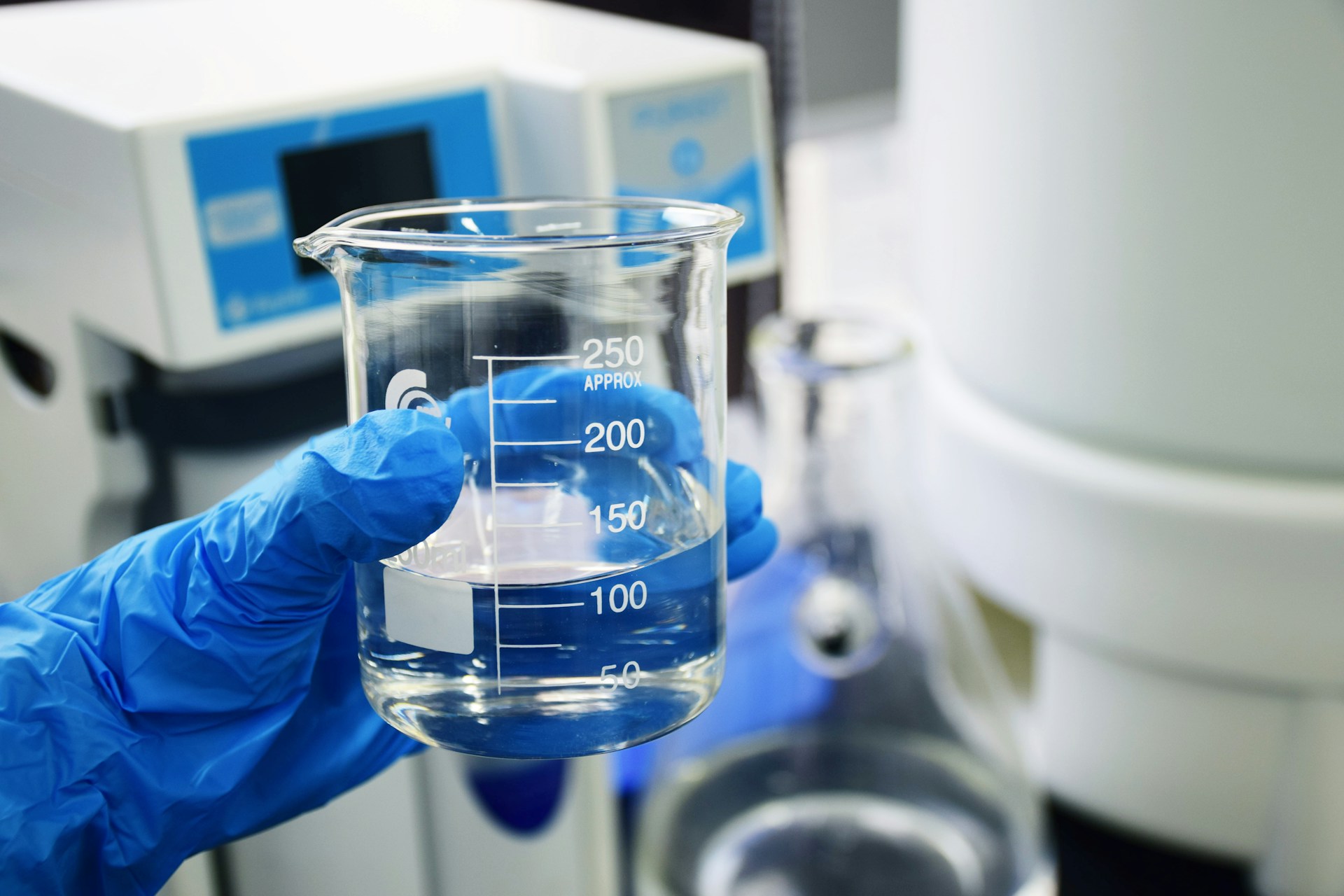
When natural disasters, municipal failures, or severe grid disruptions compromise clean water supplies, filtration alone is often not enough[1]. While mechanical gravity filters and ceramic micro-candles excel at trapping protozoan parasites like Giardia and pathogenic bacteria like E. coli, standard physical micro-filters cannot mechanically block enteric waterborne viruses[1], [2].
Viruses like Norovirus, Rotavirus, and Hepatitis A range between 0.02 and 0.08 microns in size—substantially smaller than the 0.2 to 0.9-micron pore matrices found in standard gravity and portable field filters[2], [3]. If floodwaters or compromised water mains carry sewage, agricultural runoff, or viral contamination, chemical disinfection is your primary line of defense to achieve true biological safety[1], [4].
Making raw or questionable water safe requires understanding how common chemical oxidizers destroy pathogens, how water temperature and turbidity alter kill times, and how to execute precise field dosing without toxic chemical overdrives[1], [5].
Safety & Field Disclaimer: The water disinfection protocols outlined in this guide are provided for educational and emergency preparedness reference only and reflect general guidelines from the CDC, EPA, and FEMA. Chemical concentrations vary by manufacturer and degrade over time—always verify the exact active ingredient percentage on your container label, follow manufacturer safety data sheets, and wear appropriate eye and skin protection when handling concentrated oxidizers like calcium hypochlorite. When municipal infrastructure fails, follow official local boil-water advisories whenever fuel is available, and consult a physician before using iodine-based treatments if you are pregnant, nursing, or have a thyroid condition.
Disinfectant Comparison: The Four Primary Chemical Agents
Four primary chemical agents dominate emergency water treatment: liquid sodium hypochlorite (household bleach), calcium hypochlorite (dry pool shock), chlorine dioxide, and tincture of iodine[1], [5]. Each presents distinct chemical kinetics, shelf lives, and operational trade-offs:
| Chemical Agent | Primary Active Compound | Chemical Shelf Life | Standard Potable Dosing (Clear Water) | Pathogen Protection Profile | Key Field Considerations & Drawbacks |
|---|---|---|---|---|---|
| Liquid Household Bleach | Sodium Hypochlorite (6% – 8.25%) | 6 to 12 Months (Rapidly degrades in heat)[5], [6] | 6 to 8 drops (0.5 mL) per gallon / 5.5 tsp (~2 tbsp) per 55 gal[1], [5] | Bacteria & Viruses: Excellent (>99.99%)[1] Cysts (Crypto): Poor[1], [7] | Inexpensive and ubiquitous; forms trihalomethanes (THMs) with organic precursors; short shelf life[5], [8]. |
| Calcium Hypochlorite (“Pool Shock”) | Calcium Hypochlorite (65% – 73%) | 10+ Years (Dry granular form)[5], [9] | 1 part stock solution to 100 parts water (~1 pint per 12.5 gal)[5], [9] | Bacteria & Viruses: Excellent (>99.99%)[1], [9] Cysts (Crypto): Poor[1], [7] | Indefinite shelf life; highly hazardous oxidizer; requires preparing a two-stage liquid stock solution[5], [9]. |
| Stabilized Chlorine Dioxide | Chlorine Dioxide (ClO2) / Sodium Chlorite | 4 to 5 Years (Liquid parts or foil tablets)[10], [11] | 1 tablet or 5–7 drops Part A+B per quart/liter[10], [11] | Bacteria & Viruses: Complete (>99.99%)[10] Cysts (Crypto & Giardia): Certified kill (>99.9%)[7], [10] | Gold-standard chemical agent; kills Cryptosporidium; zero harsh chlorine taste; longer reaction contact time required[7], [10]. |
| Tincture of Iodine | Iodine (2% USP solution) | 3 to 5 Years (Tight amber glass)[5], [12] | 5 drops per quart (Clear) / 10 drops per quart (Cold/Cloudy)[5], [12] | Bacteria & Viruses: Good (>99.9%)[1], [12] Cysts (Crypto): Ineffective[1], [7] | Leaves strong antiseptic taste; health contraindications for pregnant women and thyroid conditions; temporary use only[12]. |
Contact Time and Temperature: The Physics of Pathogen Neutralization
Dosing chemicals into cold or murky water and drinking it after ten minutes is one of the most common—and hazardous—assumptions in field preparedness[1], [13]. Disinfection efficacy is governed by the EPA’s Concentration × Time (CT) concept: CT = Disinfectant Residual Concentration (mg/L) × Contact Time (Minutes). To achieve equivalent pathogen reduction, when water temperature drops or pH rises, required contact time increases dramatically[7], [13].
- The Temperature Penalty: Chemical reactions halve in velocity for roughly every 18°F (10°C) drop in temperature[13]. If using sodium hypochlorite bleach in ice-cold mountain runoff or winter conditions (40°F / 4°C), the baseline 30-minute wait time must be extended to a minimum of 60 minutes before consumption[1], [5].
- The Cryptosporidium Exception: Cryptosporidium oocysts possess a thick outer protective wall resistant to free chlorine. Normal bleach dosing will not kill Cryptosporidium within a reasonable timeframe[1], [7]. Only chlorine dioxide or boiling achieves verified chemical destruction of Cryptosporidium oocysts, requiring a minimum contact time of 4 hours in cold water[7], [10].
Field Dosing Protocols: Step-by-Step Execution
1. Liquid Household Bleach Dosing
Only use plain, unscented household bleach with a sodium hypochlorite concentration between 6% and 8.25%[1], [5]. Never use splash-less, scented, or color-safe bleaches, as they contain synthetic surfactants, masking perfumes, and thickeners toxic for ingestion[5].
- Clear Water: Add 6 to 8 drops (approx. 1/8 teaspoon or 0.5 mL) per gallon of water[1], [5].
- Cold, Cloudy, or Colored Water: Double the dosage to 12 to 16 drops (approx. 1/4 teaspoon or 1.0 mL) per gallon[1], [5].
- Bulk 55-Gallon Drum: Add 5.5 teaspoons (just under 2 tablespoons or 27.5 mL) of standard 6% to 8.25% unscented bleach[1], [5].
- Verification: Mix thoroughly and allow it to stand for 30 to 60 minutes. The water should possess a faint, distinct chlorine scent[1], [5]. If no chlorine scent is detectable, repeat the dosage once and let stand for an additional 15 minutes[1]. If the chlorine scent is overwhelmingly strong, pour the water back and forth between two clean containers to aerate and off-gas residual chlorine[5].
2. Calcium Hypochlorite (Pool Shock) Stock Solution
Dry calcium hypochlorite (65% – 73% available chlorine) is the ultimate indefinite chemical reserve because it does not degrade over years of storage like liquid bleach[5], [9]. However, dry granules cannot be added directly to drinking water; you must prepare a controlled two-stage stock solution[9].
- Prepare Stock Concentrate: Working in a well-ventilated area while wearing eye protection, slowly add one heaping teaspoon (approximately 1/4 ounce or 7 grams) of dry calcium hypochlorite into 2 gallons of clean water (always add the chemical to water, never water to dry shock)[1], [9]. Stir vigorously until completely dissolved. This produces a chlorine stock concentration of approximately 500 mg/L (500 ppm)[9].
- Treat Raw Water: Add one part of your chlorine stock solution to every 100 parts of water you wish to purify[9]. Practically, this equals:
- Contact Window: Agitate thoroughly and allow a minimum contact window of 30 minutes (60 minutes if water is below 50°F) before drinking[5], [9].
For guidance on long-term chemical preservation and rotating bulk reservoirs over multi-year periods, review our guide to long-term potable water storage.
Turbidity Interference: Why Murky Water Causes Disinfection Failure
Chemical disinfectants cannot work effectively through high turbidity (suspended sand, silt, and organic clay)[1], [14]. When chemical halogens enter turbid water, suspended organic particles create an immediate oxidant demand, chemically neutralizing the disinfectant before it can rupture pathogen membranes[14]. Furthermore, microscopic silt particles physically shield bacteria and viral capsids within tiny crevices, allowing viable pathogens to survive even heavy chlorine dosing[1], [14].
If raw water exhibits visible cloudiness (>5 NTU), you must clarify it before adding chemical treatments[1], [14]:
- Coarse Straining: Pour water through a clean cotton bandana, woven cloth, or coffee filter to remove gross debris[1].
- Gravity Flocculation & Settling: In heavily turbid clay water, allow the water to settle undisturbed in a bucket for 6 to 12 hours[14]. Dosing with plain alum (aluminum potassium sulfate) at approximately 0.5 to 1.0 grams per gallon accelerates clay coagulation, dropping suspended solids to the floor[15]. Decant the clear supernatant liquid from the top before adding disinfectants[15].
The Operational Debate: Filter First or Treat First?
Preppers frequently disagree on the sequence of operations: Should you mechanically filter water first and chemically treat it second, or disinfect raw water first and filter it after? Both approaches have distinct engineering merits depending on the condition of your raw water and your filtration hardware:
Method A: Filter Then Treat (The Standard Field Protocol)
- The Process: Raw water is run through a gravity micro-filter (ceramic or hollow-fiber) to strip out all mud, turbidity, Giardia, and Cryptosporidium. Disinfectant (chlorine or chlorine dioxide) is then dosed into the clean lower chamber to eliminate remaining viruses[2], [3].
- The Advantage: Zero turbidity remains to consume your chemical oxidizer, ensuring complete viral destruction with minimal chemical volume[14].
- The Drawback: The treated water will retain a distinct chlorine residual taste unless allowed to off-gas naturally[5].
Method B: Treat Then Filter (The Carbon-Scrubbing Protocol)
- The Process: Raw, settled water is chemically dosed in a collection bucket and allowed to complete its full 30 to 60-minute contact time. The chemically treated water is then poured into a countertop gravity system equipped with an activated carbon core[2], [16].
- The Advantage: The dense activated carbon block adsorbs residual free chlorine, chloramines, and chemical off-flavors, delivering pure, odorless drinking water straight from the spigot[2], [16].
- The Drawback: Turbidity in the collection bucket can shield pathogens during the chemical phase, and pouring muddy water into the top chamber will blind your expensive filter elements prematurely[14], [16].
To understand how carbon cores capture residual disinfectants and heavy metals after chemical neutralization, see our technical breakdown of off-grid gravity water filtration systems.
The Preppers Gab Field Verdict
These steps cannot be skipped! Trust an old infantry soldier that skipped a step and ended up in Martin Army Hospital with dysentery.
Chemical water disinfection is an indispensable, lightweight tool in emergency survival, but it must be applied with technical discipline:
- For Indefinite Homestead Storage: Keep calcium hypochlorite (pool shock) sealed in airtight containers. A single 1-pound bag of dry granular shock yields over 10,000 gallons (roughly 12,800 gallons at standard 1:100 stock dilution) of drinking water, outlasting liquid bleach by nearly a decade[5], [9].
- For Bug-Out Bags & Mobile Rigs: Carry stabilized chlorine dioxide tablets or two-part drops. They are the only chemical agents that eliminate Cryptosporidium oocysts, and they leave zero harsh chemical aftertaste[7], [10].
- The Golden Rule of Cold Water: Never drink chemically treated cold water (<50°F) after only 15 or 30 minutes. Double your wait time to at least 60 to 120 minutes to account for sluggish halogen kinetics[1], [13].
- Pair With Micro-Filtration: Never rely on liquid bleach alone against surface water—pre-filter through a 0.2- to 0.9-micron mechanical filter first to strip out chlorine-resistant Cryptosporidium oocysts[1], [7].
Technical References & Sources
- Centers for Disease Control and Prevention (CDC) – Emergency Disinfection of Drinking Water: Guidelines for Household Use (2024). ↩
- World Health Organization (WHO) – Guidelines for Drinking-Water Quality: Microbial Aspects and Enteric Pathogen Scaling (4th Edition, 2022). ↩
- U.S. Environmental Protection Agency (EPA) – National Primary Drinking Water Regulations: Microorganisms and Disinfection Byproducts (EPA 816-F-09-004, 2022). ↩
- American Water Works Association (AWWA) – Water Quality & Treatment: A Handbook on Drinking Water (Pathogen Disinfection Kinetics, 6th Edition, 2021). ↩
- Federal Emergency Management Agency (FEMA) – Food and Water in an Emergency: Disinfection Formulas and Storage Protocols (FEMA P-501, 2023). ↩
- The Clorox Company – Technical Data Sheet: Sodium Hypochlorite Degradation and Thermal Decay Curves (2023). ↩
- U.S. Environmental Protection Agency (EPA) – Alternative Disinfectants and Oxidants Guidance Manual (Chlorine Dioxide CT Formulations, EPA 815-R-99-014, 2020). ↩
- National Research Council (NRC) – Drinking Water and Health: Disinfection By-Products and Trihalomethane Formation (2020). ↩
- U.S. Army Public Health Command – Field Water Supply, Disinfection, and Calcium Hypochlorite Stock Preparation (Technical Bulletin MED 577, 2021). ↩
- Katadyn Products Inc. / Micropur – Micropur MP1 Chlorine Dioxide Tablet Technical Specification and Pathogen Log Reduction Data (2024). ↩
- Aquamira Technologies – Aquamira Water Treatment Two-Part Liquid Chlorine Dioxide EPA Registration & Efficacy Sheet (2024). ↩
- U.S. Department of Health and Human Services (HHS) – Tincture of Iodine Usage and Thyroid Contraindications in Emergency Water Treatment (2021). ↩
- Engineering ToolBox – Chlorine Disinfection CT Values and Reaction Rates vs. Temperature (2022). ↩
- U.S. Geological Survey (USGS) – Turbidity, Suspended Sediment, and Microbial Shielding in Water Supplies (2023). ↩
- World Health Organization (WHO) – Coagulation, Flocculation, and Clarification of Turbid Water in Emergency Situations (Technical Note No. 5, 2021). ↩
- NSF International – NSF/ANSI Standard 42 & 53: Aesthetic Effects and Contaminant Reduction in Point-of-Use Drinking Water Systems (2025). ↩